


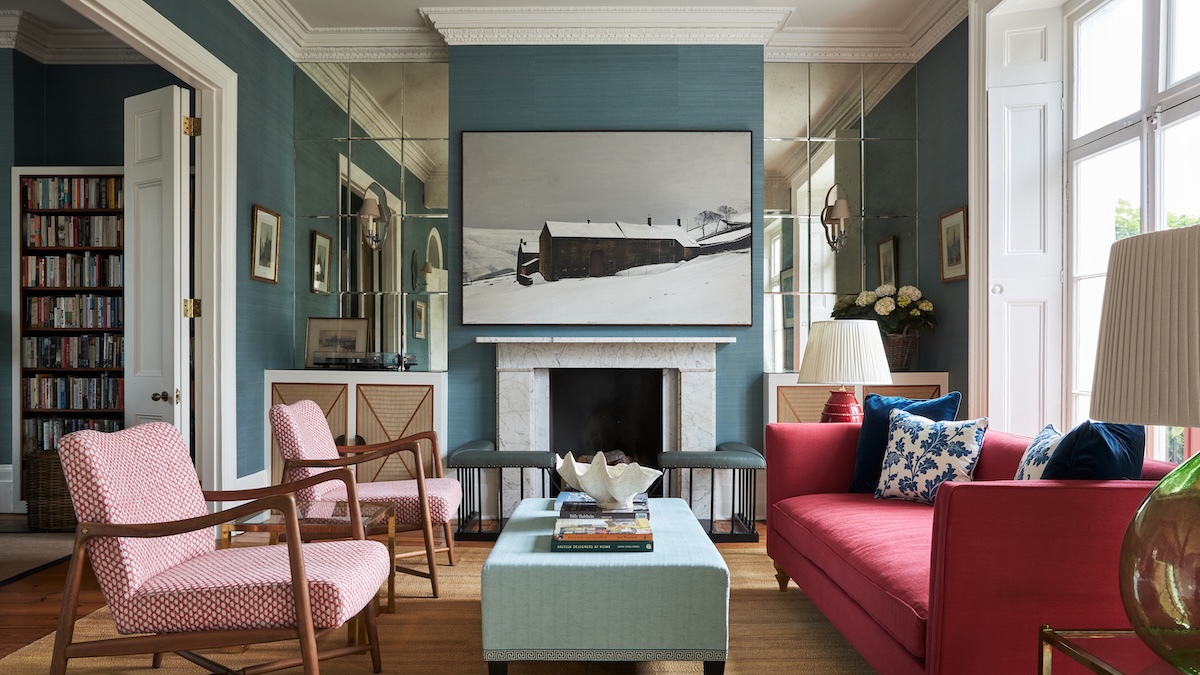
In Conversation with EMMA SHERLOCK
Artful spaces that encourage people to gather, connect and linger for longer.
With a fascinating background in art and fashion, Emma Sherlock brings a richly layered and instinctive perspective to interior design. Since founding her Hampshire-based studio in 2016, she has become known for creating homes that feel deeply personal – balancing elegance with warmth, practicality with atmosphere, and timelessness with individuality.
Influenced by both her editorial career and a lifelong appreciation for creative, welcoming environments, Emma approaches each project with a strong sense of narrative and an understanding of how people truly want to live. Her interiors are characterised by thoughtful mixes of antiques, vintage textiles, art and unexpected pieces, all brought together with a refined yet relaxed sensibility.
From country homes to boutique commercial spaces, Emma’s work is guided by the belief that interiors should not only look beautiful, but support connection, comfort and everyday life. Wells had the privilege of speaking with Emma about her creative journey, the importance of atmosphere in design, and why the most enduring interiors are those that feel authentic to the people living in them.
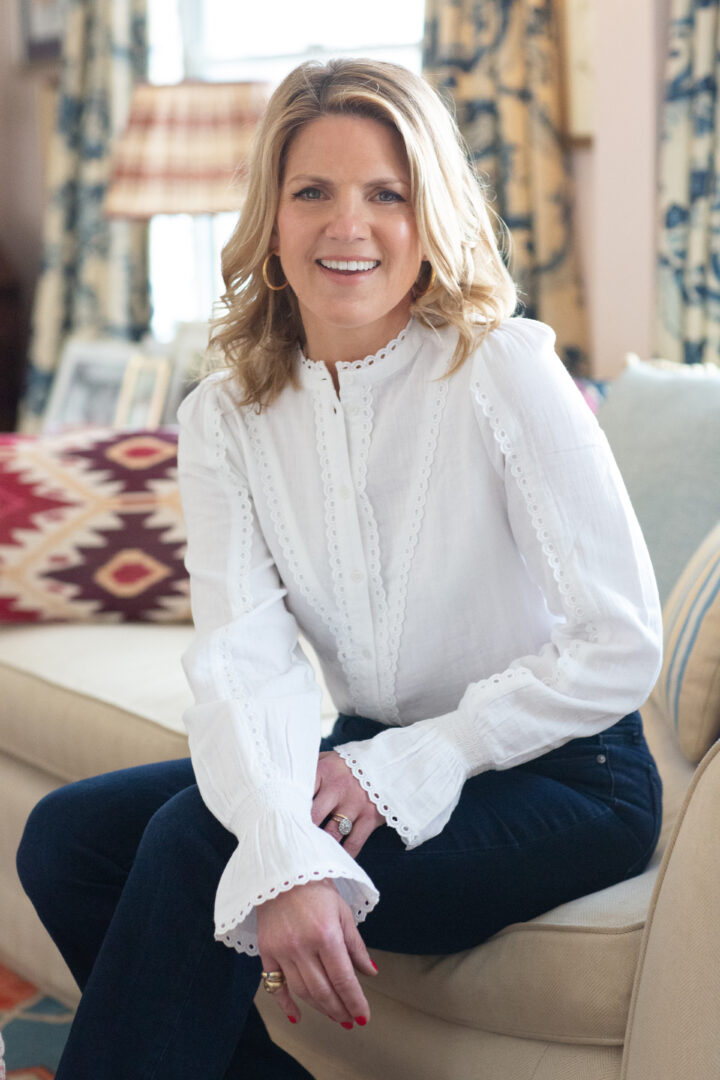
Emma Sherlock
You studied Fine Art, Architecture and History of Art before spending a decade at Vogue. How did those early creative influences shape the way you approach interior design today?
The combination of all of it was such a fantastic education and has really helped hone my eye. Painting and studying History of Art is so useful as you study colour palettes, light, scale and perspective and it trains you to really look at something. Even though I decided not to pursue a career in Architecture, my year studying it was incredibly useful and gave me an ability to draw floorpans and elevations to scale and understand building structures and building processes. While all our studio drawings are done by our technical designer I still find the best way to start a new project is to take a pencil to the floor plans – it really helps me visualise the space. And at Vogue I was extremely fortunate to travel and produce a lot of photo shoots which really opened my eyes to new places – everything from the architecture of Havana to a villa designed by Oliver Messel in Barbados. One of the best things about working at Vogue were the fantastic people I worked with and the collaboration it took from all departments to produce each issue. Collaboration is still something that I still love and place a huge amount of importance on. You need a really collaborative and communicative relationship with your clients and the architects and craftspeople you are working alongside in order to run a successful project.
Your background in fashion publishing involved curating visual campaigns and telling stories through imagery. How does that experience influence the way you compose a room – do you approach a scheme almost like styling a shoot?
I think it definitely encouraged my love of a bit of theatricality in decorating and to be bold with trying unexpected combinations – be that in fashion or interiors. I always want to create rooms that have impact and that you notice. I think that creating your home is very similar to putting together an outfit, it’s extremely personal and is a way of expressing who you are to the world. But the difference is that when you are designing a room you really have to think about how it will feel and look when you are in it, experiencing it and living in it and you have to prioritise comfort and the atmosphere of the room and actually not think about whether it will photograph well or not. But then when we do photograph a room at the end of the project my background really helps me as I’ve spent a lot of time with photographers looking through cameras seeing what is working or not. I do think my background has given me a good understanding of the importance of “play” in order to maximise my creativity. You have to experiment with new things and move things around to see if they work and have the confidence to do that.
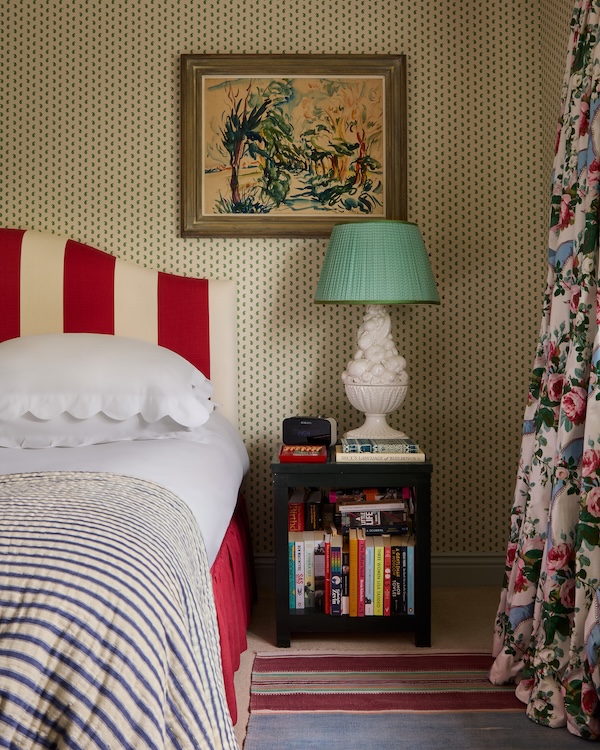
Hampshire Cottage by Emma Sherlock, Photographer Boz Gagovski
You’ve spoken about growing up in a home that encouraged gathering and celebration, and we love this idea of ‘linger for longer’. How do you design spaces that not only look beautiful but genuinely invite people to stay, connect and feel at ease?
I think there are three main components – most importantly the space must be really comfortable with generous seating and atmospheric lighting. I also think rooms that have depth created through layers of pattern and texture are really relaxing; when a room has lots to look at in it – rugs, books, pictures and objects, they can bring a lot of pleasure.
Crucially though good houses and atmospheres are made by the people that live in them! I love laying a pretty table for guests and hopefully cooking some good food – If I’m organised in advance, I’m then relaxed and so hopefully my guests will be too.
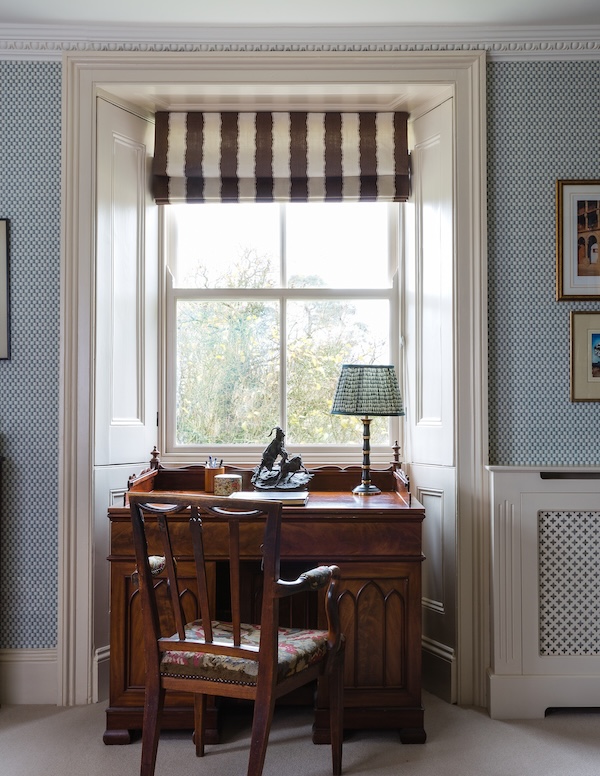
Norfolk House by Emma Sherlock, Photographer James McDonald
Your interiors are known for their soulful, layered character – antiques, vintage textiles, art and bespoke pieces all working in harmony. How do you balance the unusual with the timeless so that a scheme feels distinctive yet enduring?
Mixing eras isn’t about following rigid design rules; it’s about instinct. I always encourage clients to choose pieces because they love living with them, objects that remind them of travels or moments in their life, rather than because they think they ought to like them, or simply because they’re valuable. When blending old and new, getting the right proportion of pieces in relation to the room size is crucial. A piece doesn’t need to match the period of the house; it simply needs to suit the scale of the room. If you’ve got the right-sized table with the right-sized lamp on it in the right space, it will look good no matter which periods you’ve combined. Colour also helps to achieve balance and unify pieces from different periods. A consistent palette acts as a thread that connects the room, whether expressed through upholstery, artwork or paint.
You offer a comprehensive, fully managed service – from concept to final installation. What do you think clients value most about that continuity, and how does being involved in every stage elevate the final result?
The earlier we are involved in a project the better. When you have an architect, building firm, client and interior designer all working and thinking about the space together you tend to end up with the happiest of outcomes. I think clients value our experience and the time we spend with them, really getting to know them and what they need from the space. The aim is always for our clients to live well in their homes and get the maximum amount of pleasure out of being in them.
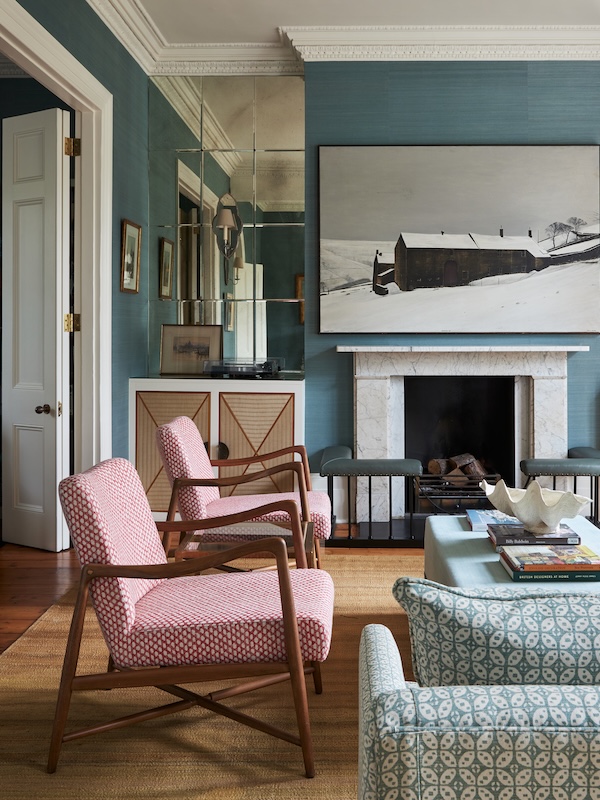
London Villa by Emma Sherlock, Photographer Boz Gagovski
You work across everything from country manors to boutique commercial spaces. How does your design approach shift depending on the setting – and what principles remain constant regardless of scale or location?
I don’t have a formulaic approach to decoration and I think it’s imperative to approach each project with fresh eyes. I find that if I focus on the architecture of the building and the clients’ personality and lifestyle then the right approach becomes apparent. But I do have a logical process that I follow every time – it starts with space planning, furniture layouts and then electrical plans. If we’ve got all those bits right, the scheme then comes together pretty easily.
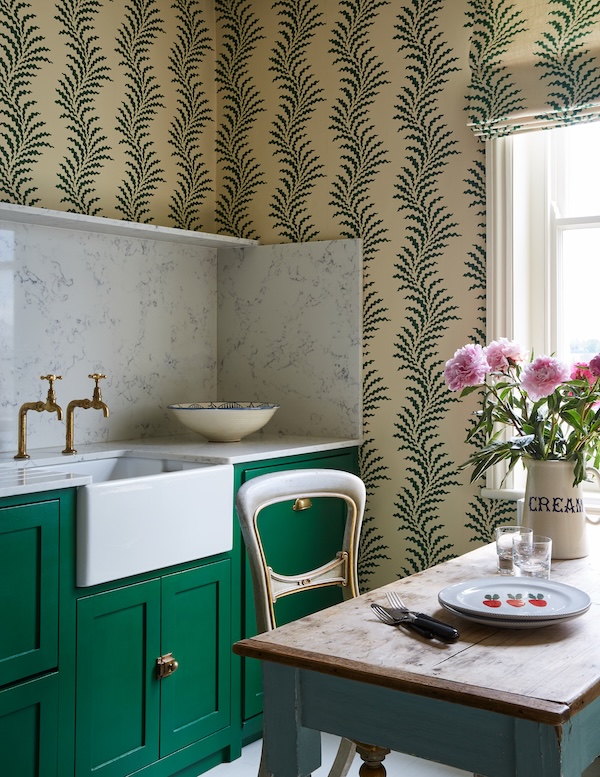
London Flat by Emma Sherlock, Photographer Boz Gagovski
Your spaces are rich and atmospheric, but also highly functional. What practical decisions do you believe make the biggest difference in ensuring a home works beautifully for everyday life?
It’s really thinking about the nuts and bolts of how our clients will live in their homes right down to the nitty gritty. Where is the hoover kept and have you put enough electrical sockets in the places where they will need them? Is the china stored near the dishwasher? Have you created a practical space for wellies, coats and muddy dogs? Does the laundry room work well and have enough storage? Can you sit down on a sofa and there is a table nearby to put down your cup of tea? All of these things are small on their own but if overlooked will be annoying. Really comfortable homes are well thought through from the beginning of the design process.
You have a natural penchant for the unexpected. What draws you to a piece – whether furniture, art or textile – and how do you know when something slightly unconventional is exactly what a room needs?
I think it’s very instinctive so I find it hard to put my finger on it. I love shopping and sometimes you just get lucky and find something you didn’t know you needed but really works in your home. I do think that if you buy things you love they will work in your home, whatever your style.
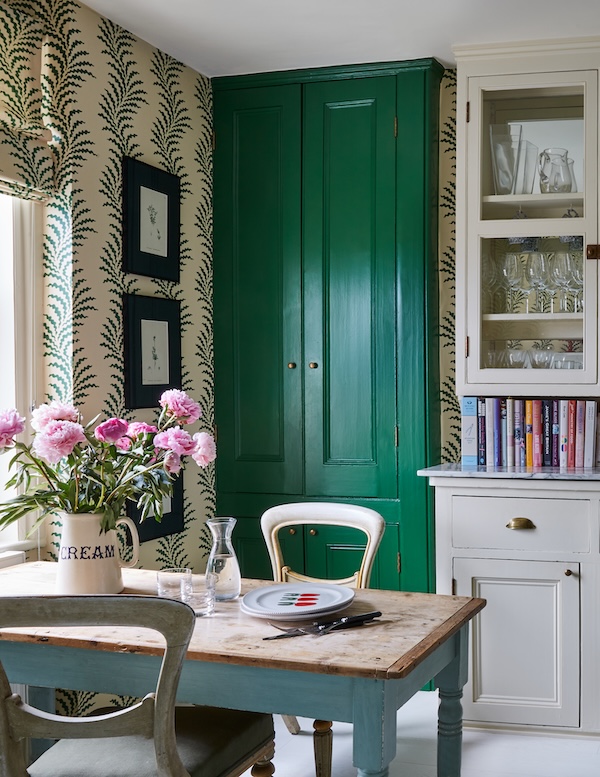
London Flat by Emma Sherlock, Photographer Boz Gagovski
In your London Flat project you chose a Soane wallpaper that really sets the tone for the dining space. How do you think about incorporating wallpaper into a scheme?
I absolutely love decorating with wallpaper as it gives such depth to a room and is often the start of great pattern play in a space. Wallpaper has the ability to really enhance a room that otherwise might lack lustre and is often the first thing I choose when working on a scheme. You can use coverings in so many different ways. The floor to ceiling botanical wave pattern of Soane’s Scrolling Fern wallpaper created a statement for a client who wanted her London kitchen to have some character but it also elevated the ceiling height which helped make the relatively small space feel bigger. In other instances, I find using a wallpaper pattern can help make a very big room feel cosier and more enveloping. Normally I am always looking for the right design for the right space – I’m putting a large scale Robert Kime paper into a corridor in an English Manor House at the moment and the colours will sit really well with the original tiled floor and give a bit of character to a rather unloved space without being too overwhelming or dramatic. Often it’s the background colour that I’m concentrating on as well as the actual design.
If you could give one piece of design advice that everyone should know – something simple but transformative – what would it be?
Be true to yourself and have the confidence to decorate your way – it will bring you great joy and make for a happy home. Comfortable sofas are a good investment and buying things you can take with you if you move house is also worth thinking about.
We’re delighted to share this interview with you. If you’d like to discover more about Emma and her design studio, visit her website or follow as her projects progress on Instagram: